

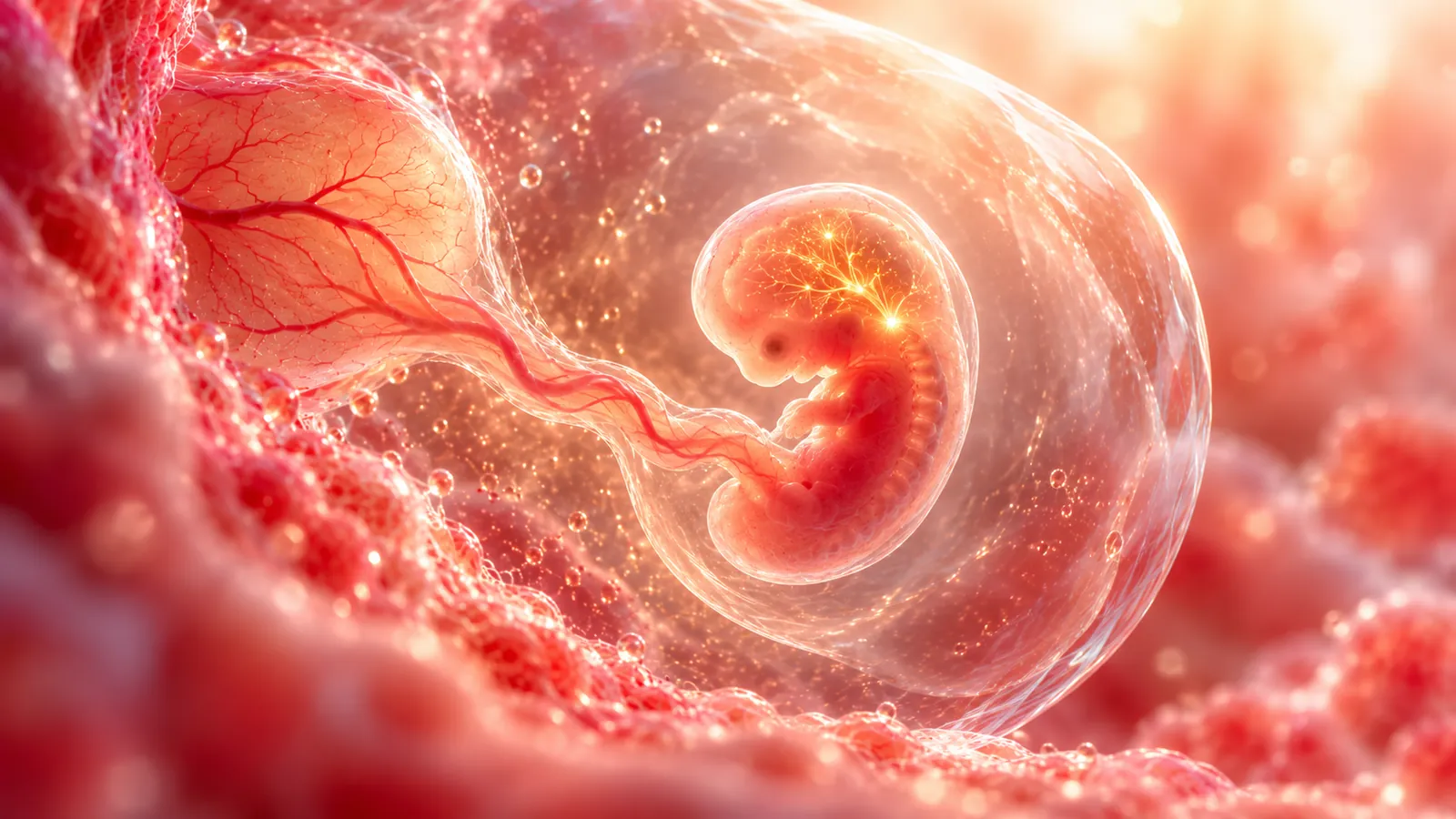
7 Weeks Pregnant: A Quarter of a Million Brain Cells a Minute
Wherever you are reading this, stop for just a second and breathe.
Reviewed by Courtney Garland, NICU Registered Nurse, IBCLC Lactation Consultant and Paediatric Sleep Consultant
There. In the time that one breath took, your baby, still smaller than your fingernail, made around fifteen thousand brand new brain cells. By the time this minute is out, a quarter of a million.
Week seven is the week your baby's brain truly comes alive, and the sheer scale of it is almost impossible to take in. Let me show you.
The fastest it will ever build anything
That pace does not let up. Not for a coffee break, not while you sleep, not for a single second of this week. A quarter of a million new brain cells, every minute, hour after hour after hour.
Keep that up, week after week, and by the day your baby is born there will be something like one hundred billion of these cells packed inside that small head. Roughly the number of stars in the Milky Way. A whole galaxy of mind, spun out of almost nothing, in the dark, while you answer emails and stand in queues and quietly wonder if any of this is really happening.
And here is the part I always have to stop and sit with. What is being built in there is not just tissue. It is the beginning of the mind that will one day know your face before it knows anything else in the world. That will learn the exact sound of your voice. That will, before very long at all, look up at you and understand, somewhere deep down, that you are home. All of it begins this week, at a quarter of a million cells a minute.
It is why, on an early scan, your baby's head looks far too big for its body. The brain is growing so fast that everything else is left playing catch-up. From the very start, your baby leads with its mind.
And that entire galaxy grew out of the tiny neural tube that zipped itself shut back in week five. Three weeks ago. Look at it now.
Tiny hands and feet begin
Your baby's arms and legs are coming along too.
The little limb buds from last week are flattening at the ends into shapes called hand plates and foot plates, like tiny paddles. The fingers and toes are in there already, but for now they are still joined together by webbing, a bit like a duck's foot. Over the next few weeks, that webbing quietly melts away and the fingers and toes separate into their own distinct little digits.
The face, and a vanishing tail
Up on the head, the face keeps assembling. Two little depressions appear where the nostrils will be. The earliest parts of the eyes, including the beginnings of the retinas, are forming. The mouth and jaw are taking shape.
And that little tail from last week? It is already on its way out, slowly shrinking back as your baby's lower body grows and catches up. A couple of weeks from now, it will be gone for good.
How big is my baby at 7 weeks?
Your baby has roughly doubled since last week and is now around ten millimetres long, measured from head to bottom.
Still small enough to sit on your fingertip, but growing at a pace it will never quite match again, and starting, at last, to look a little more like a baby and a little less like a sea creature.
Is it normal to feel worse this week? Or nothing at all?
Both are normal, as ever.
For a lot of women, weeks seven and eight are when the symptoms dig in properly. Stronger nausea, a bone-deep fatigue, sore breasts, a sense of smell that has become almost a superpower, and sometimes more saliva than you know what to do with. It can feel relentless, and it does not mean anything is wrong. It usually means your hormones are climbing exactly as they should.
And if you still feel perfectly fine? Also completely normal. Symptoms are never a reliable measure of how a pregnancy is going, in either direction.
From Courtney. I think about this one a lot. You might be reading this from the bathroom floor, queasy and wrung out and wondering how something so small can knock you so flat. And meanwhile, completely out of sight, your body is building the most complicated object in the known universe, a human brain, at a quarter of a million cells a minute. You do not have to feel glamorous or capable or even well to be doing something extraordinary. On the days this feels like a slog, and there will be some, I hope it helps to remember that the hardest, most miraculous work is the work you cannot see or feel at all. You are already doing it.
The one thing to do this week
Take your folate. If you are already taking it, keep going. And if you are only just starting, you are right on time and in good company, so no guilt about when you began.
This is also the week many women have their first proper appointment with a doctor or midwife, usually somewhere around seven or eight weeks. If yours is not booked yet, now is a good moment to sort it. And please be gentle with yourself if the symptoms are biting. Rest is not lazy right now. It is part of the work.
Coming up in week eight
Next week, your baby starts to look unmistakably human. Those webbed paddle hands begin to separate into actual fingers. The face gains an upper lip, the tip of a nose, and the first hint of ears. And your baby begins to make tiny, spontaneous movements, little twitches and ripples, though it will be many weeks yet before you can feel a single one.
Week eight is the last week of the embryo stage, and your baby is about to graduate. I will see you there.
The Mama Years. 2026.
You might also like
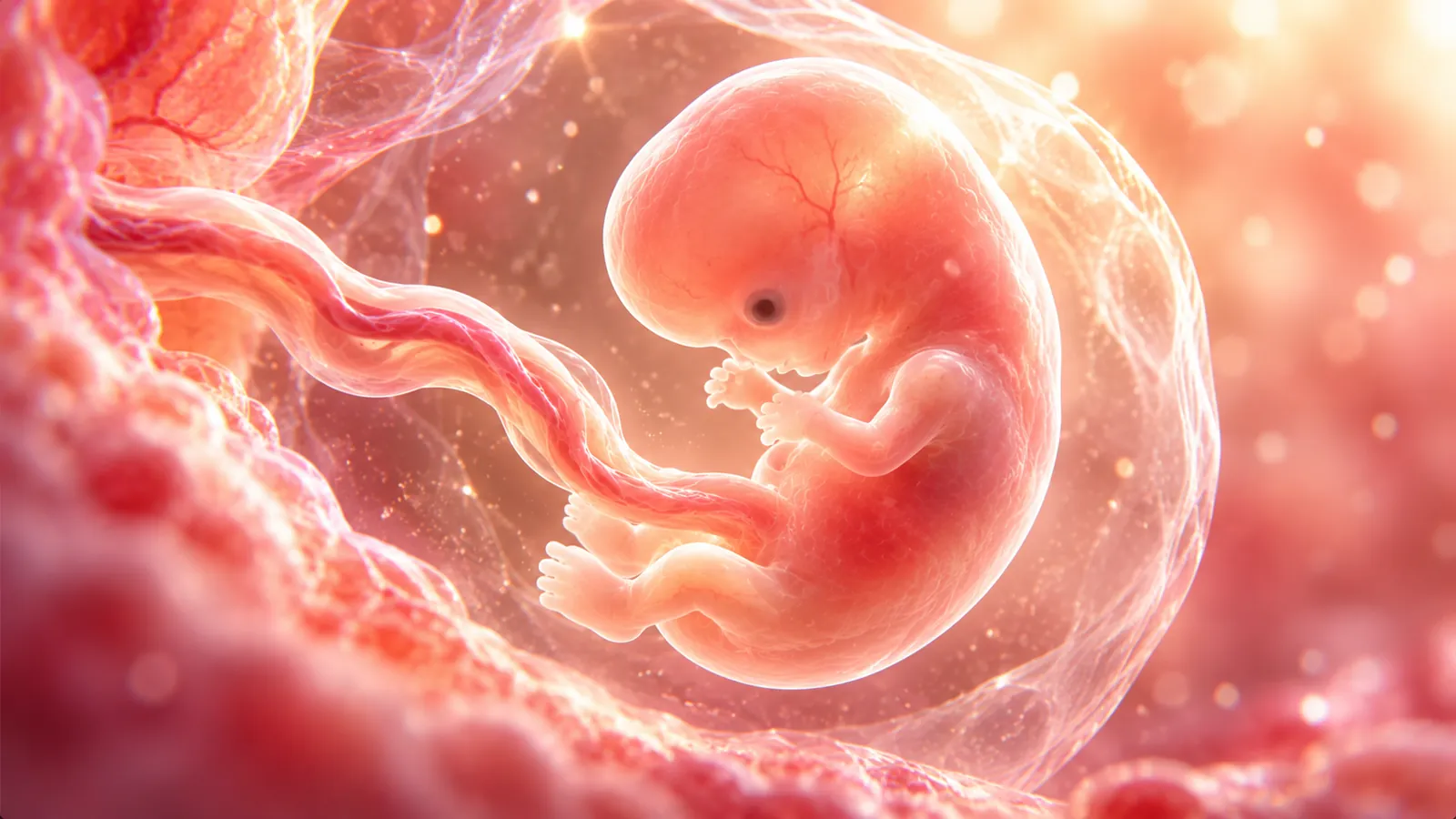
8 Weeks Pregnant: The Week Your Baby Starts to Move
Last week, your baby's brain came alive. This week, the body it will one day command starts to move.
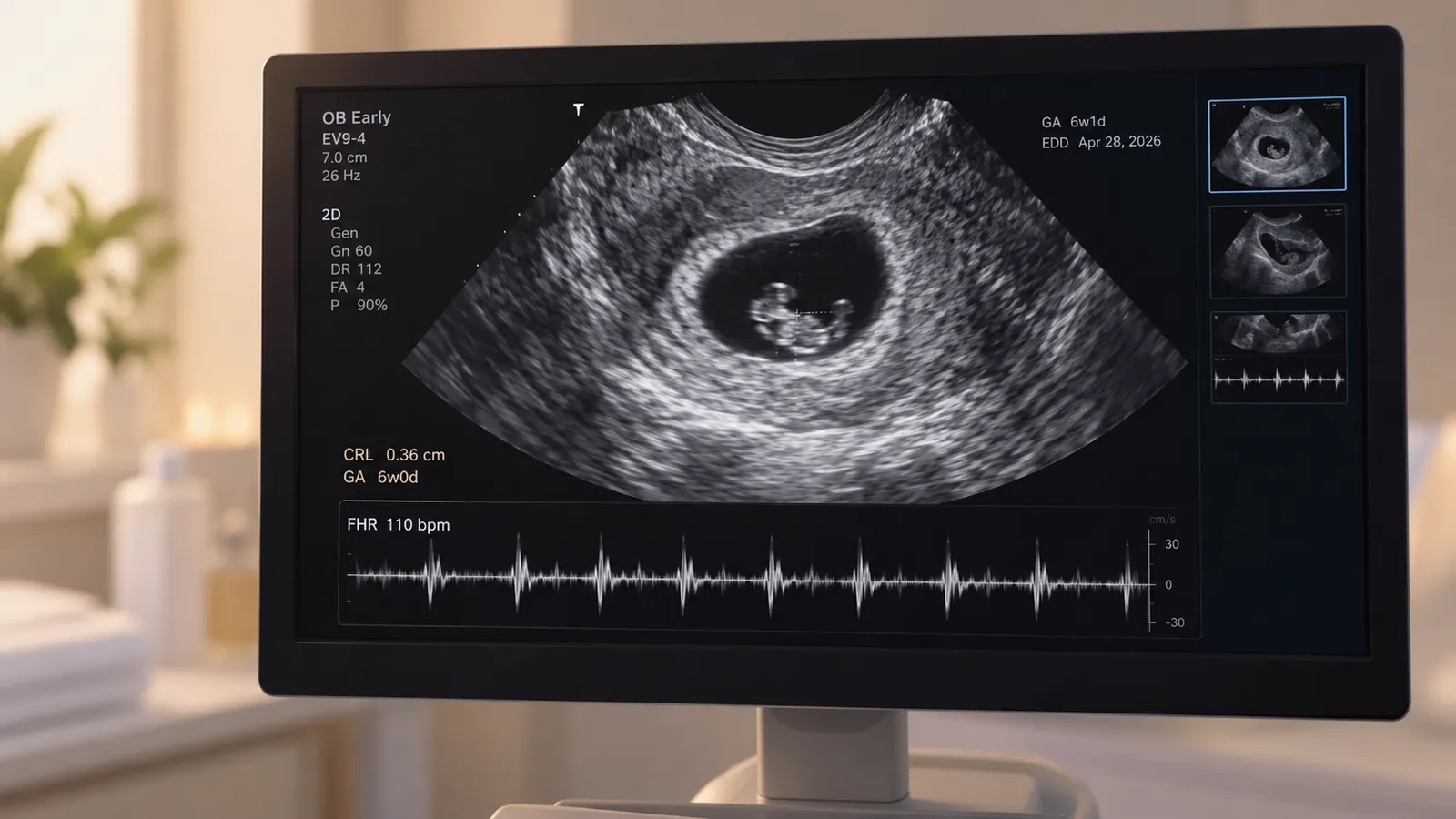
6 Weeks Pregnant: The Week You Might See the Heartbeat
Last week, deep inside you, your baby's heart flickered into life and started to beat. This week, it settles into a steady rhythm, and for the first time, there is a real chance you will actually...
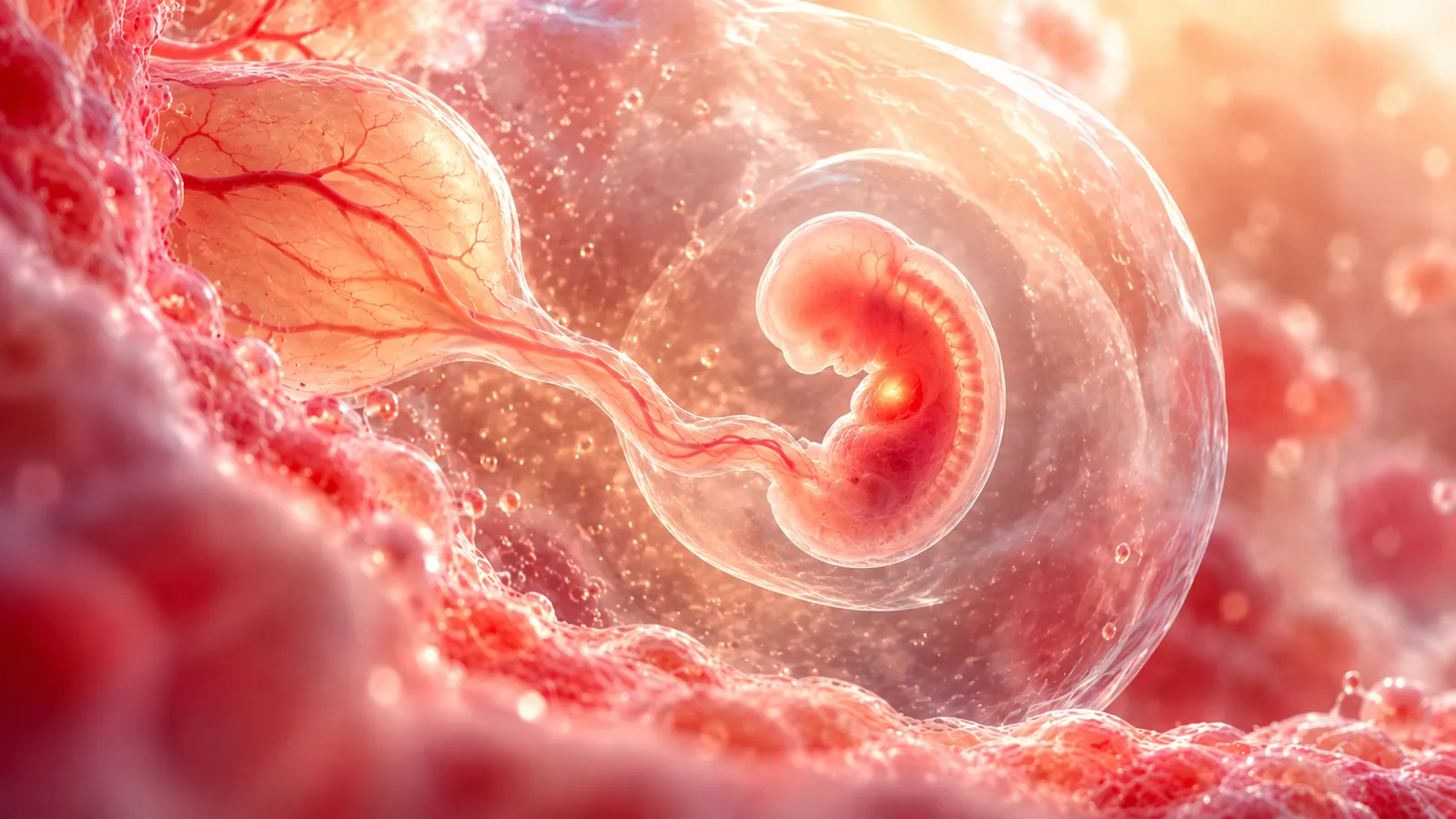
5 Weeks Pregnant: The Week the Heart Starts to Beat
Last week, you saw the line. This week, your baby grows a heart, and it starts to beat.
Want to keep following your pregnancy week by week?
Track your pregnancy, follow your baby’s development and find support for the questions that come up along the way in The Mama Years.
Open The Mama Years