


The First Breastfeed: What Actually Happens After Birth?
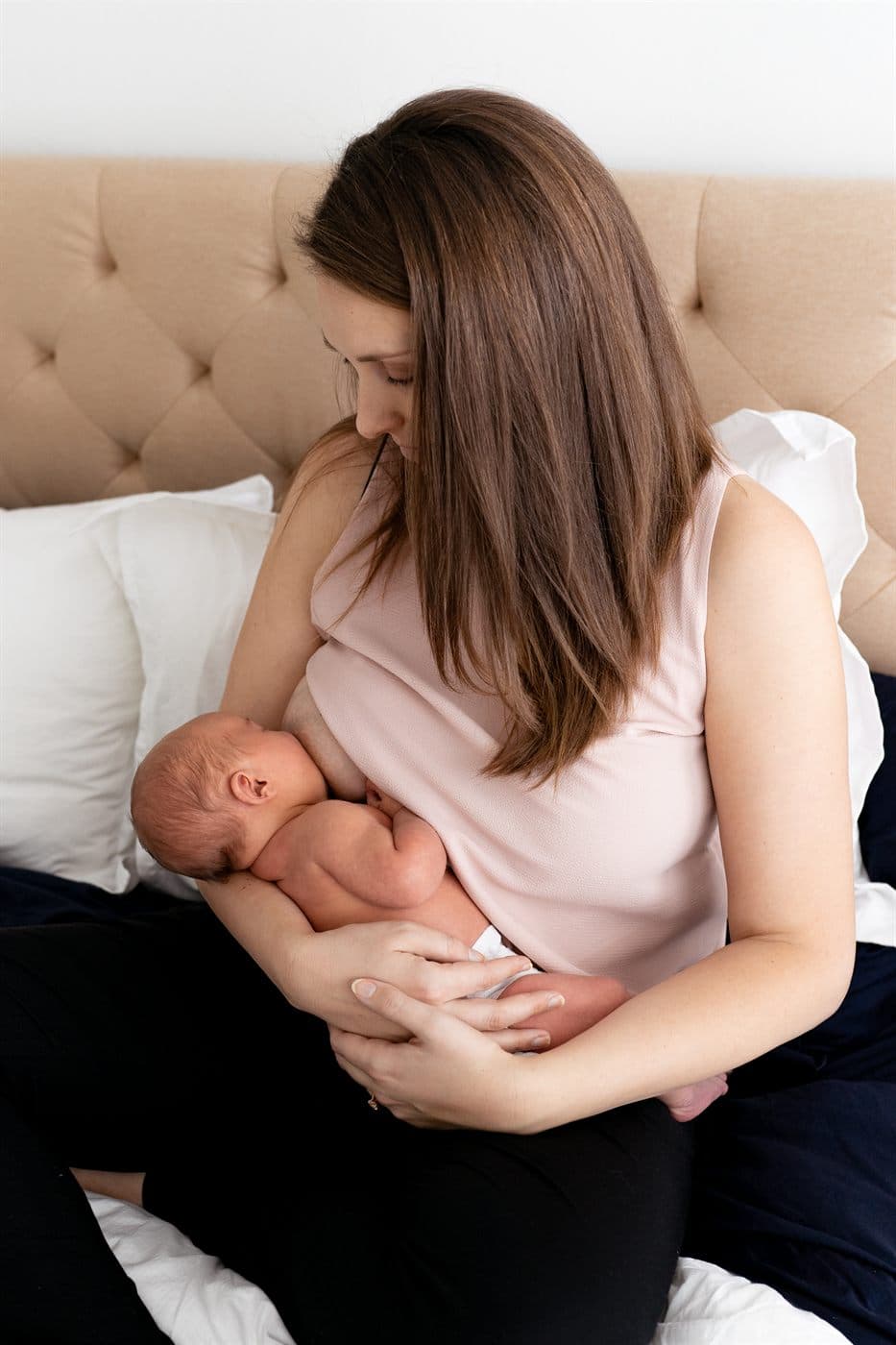
Wondering what the first breastfeed will actually be like? Learn when baby may be ready to feed, what a good latch should feel like, and what to do with a sleepy newborn.
Reviewed by Courtney Garland, NICU Registered Nurse, IBCLC Lactation Consultant and Paediatric Sleep Consultant
You have just had your baby.
You are looking at this tiny little person you have waited months to meet, and somewhere amongst everything that has just happened, you are also supposed to figure out how to feed them.
And the truth is, this can take a little time.
You are learning your baby, and your baby is learning you.
They are learning how to find the breast, how to latch and how to suck. You are learning how to hold them, how to bring them to the breast and what a good feed is actually supposed to feel like.
Some babies seem to get there really quickly.
Others need a little more time and a little more help.
So if it feels awkward at first, that does not mean you are doing it wrong. You are both learning something completely new together.
How do I know baby is ready to feed?
Some babies come out ready to go. They are turning their head, opening their mouth, rooting around and searching for the breast almost straight away. Some will even wriggle their little body towards it like they somehow already know where they are going.
And some babies need a little time to thaw out first.
If your baby is showing interest, go for it.
If they are not quite ready yet, keep them close, enjoy the skin to skin and watch for those early little signs:
Hands coming towards the mouth.
Turning their head and searching.
Opening their mouth.
Sticking out their tongue.
Licking or sucking their hands.
Rooting against your chest.
When you start seeing those little signs, offer the breast.
What should the latch actually feel like?
The first few sucks can feel a little strange or tender while baby gets onto the breast.
Your nipples have never had a tiny human attached to them before, so there can be that initial moment of, “Oh wow, that feels different.”
But it should settle.
You should not spend the whole feed gripping the sheets, curling your toes or waiting for baby to come off.
If it keeps hurting, break the latch, reset baby and try again.
Pain throughout the whole feed is a sign that the latch needs another look.
This is one of those things that is much easier to show you than explain in paragraphs. In the Breastfeeding Library, I can show you what a deeper latch looks like, different breastfeeding positions and how to break the latch safely.
What if my baby is really sleepy?
Day one babies can be sleepy little things.
One of my favourite tricks is to save the nappy change for halfway through the feed.
When baby wakes, feed first.
Let them breastfeed.
If they then fall asleep on the breast, change their nappy.
That nappy change usually wakes them back up enough to offer the breast again.
So it is simply:
Wake. Feed. Fall asleep. Nappy change. Feed again.
You are saving your best wake up trick for when you actually need it.
And then day two arrives. A lot of babies suddenly find their voice and become much more interested in feeding.
How often should my newborn feed?
Most newborns breastfeed around 8 to 12 times in 24 hours, sometimes more.
Feeds may be every two to three hours, but here is the bit that surprises a lot of mothers:
The time between feeds is counted from the start of one feed to the start of the next.
So if baby starts feeding at 10:00 am, feeds until 10:30 or 10:40, and is feeding every two hours, the next feed may start around 12:00 pm.
Not two hours after the last feed finished.
Which is why those first few days can sometimes feel like you have only just finished feeding before it is time to start again.
Because sometimes, you have.
What if the first feed is not what I expected?
All four of my babies went onto the breast within roughly that first hour, but they were all different.
Some were ready faster.
Some needed a little longer to thaw out.
You and your baby are learning this together.
And that first feed may not be what you expect.
With time, it will get easier.
Related articles
• My Milk Hasn’t Come In Yet. What Is My Baby Actually Drinking?
You might also like
How Do I Know My Breastfed Baby Is Getting Enough Milk?
Wondering if your breastfed baby is getting enough milk? Learn the signs to look for, including nappies, feeding, settling and weight gain.

Why Does My Baby Keep Falling Asleep at the Breast?
Does your newborn keep falling asleep at the breast? Learn why newborns can be sleepy, how to wake baby for another feed, and how to tell if baby may need more help.

My Milk Hasn’t Come In Yet. What Is My Baby Actually Drinking?
If your milk has not come in yet, what is your newborn actually drinking? Learn what colostrum is, why baby may feed so often, and when your milk usually starts increasing.
Want to see your baby’s patterns come together?
Track feeds, sleep, nappies and growth in one place, and find support for the questions that come up along the way in The Mama Years.
Open The Mama Years