

17 Weeks Pregnant: The Lifeline Between You and Your Baby
Last week, your baby began to hear the sound of you. This week, let me tell you about the extraordinary thing that has connected you both from the very start, and that grows strong and sturdy now....
Reviewed by Courtney Garland, NICU Registered Nurse, IBCLC Lactation Consultant and Paediatric Sleep Consultant
Last week, your baby began to hear the sound of you. This week, let me tell you about the extraordinary thing that has connected you both from the very start, and that grows strong and sturdy now. The cord.
Welcome to week seventeen. Your baby is beginning to round out with the first soft fat, a protective coat is forming over that delicate skin, and the lifeline running between your baby and you is becoming a thick, strong rope. There is real wonder in that cord. Let me show you.
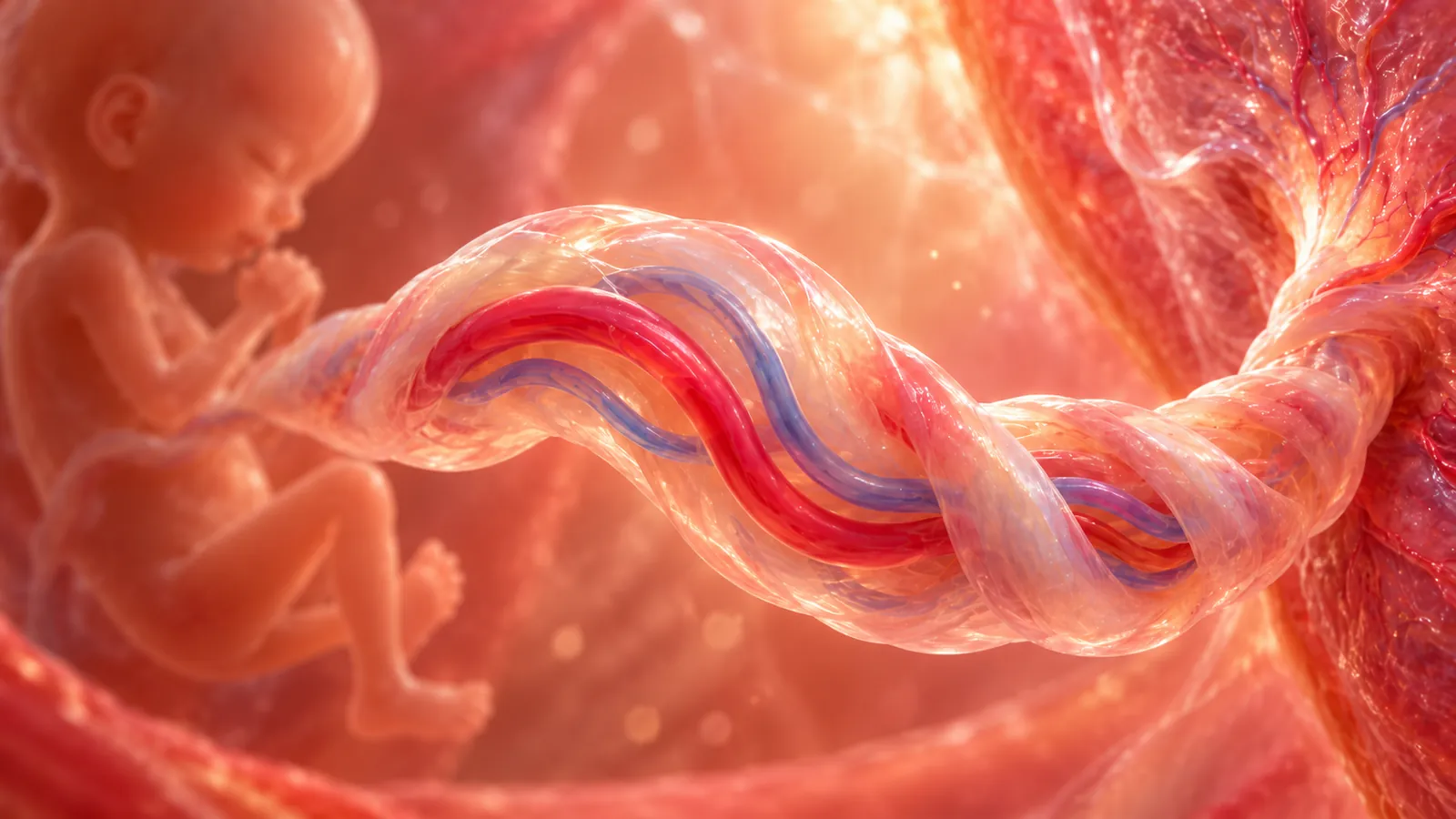
The lifeline between you
The umbilical cord does not get nearly enough credit.
By now it is thickening into a strong, springy rope, and it is one of the most beautifully designed things in your whole pregnancy. Inside it run three blood vessels, coiled together in a gentle spiral. One vein carries warm, oxygen-rich, food-laden blood in to your baby. Two arteries carry waste away. And cushioning all three is a soft, jelly-like padding that stops the cord kinking or knotting as your baby tumbles and turns, so the supply never once stops.
Here is what that means. Every breath of oxygen your baby takes, it takes through this cord. Every scrap of nourishment, every bit of the food you eat, reaches your baby this way. The cord runs to the placenta, that astonishing organ you grew from scratch, which reaches into your blood and draws out everything your baby needs, then sends it down the line. For now, this is how your baby breathes and eats and lives. Through you. Always through you.
And one day, in the very first minutes after birth, this cord will be gently clamped and cut, and your baby will take over its own breathing, its own feeding, for the very first time. All that will remain is a small knot that heals and tucks itself in. Your baby's belly button. The quiet little mark, carried for a whole lifetime, of the place where they were once joined to you, and kept alive by your body, when they could not yet do a single thing alone. Everyone you have ever met carries one. Look down. You have one too.
Your baby begins to fill out
At the same time, your baby is starting to soften.
Until now, your baby has been lean and wiry, all head and limbs beneath thin, see-through skin. This week, the very first fat begins to lay down underneath that skin. It is the beginning of the soft, padded roundness you will one day press your lips to, the cheeks and the thighs and the little folds. This early fat does important work too, getting ready to keep your baby warm and fuelled in those first days out in the world, where there is no cord to do it anymore.
A first protective coat
And your baby's skin gets a coat.
A creamy, waxy white substance called vernix begins to spread over your baby this week, rather like the barrier grease a long-distance swimmer wears. It protects that thin, delicate skin from going waterlogged and chapped after months of soaking in fluid. Some babies are still wearing a layer of it when they are born, white and creamy in the folds of their skin, and many of us who have caught babies for a living will tell you it is rather lovely. Proof of exactly where they have just come from.
How big is my baby at 17 weeks?
Around thirteen centimetres now, head to bottom, and about a hundred and forty grams. Your baby's skeleton keeps hardening from soft cartilage into proper bone, and the movements are getting stronger by the day.
Still light, still cushioned by plenty of room, and joined to you by that remarkable cord every single second of the day.
What is happening in my body?
Your bump is rounding out and rising, and your uterus is now big enough to start nudging your other organs gently aside to make room.
Many women feel good in these weeks, with steady energy and a real appetite. If this is not your first baby, those first faint flutters may be turning into something a little more definite. And your anatomy scan, the detailed one, is likely coming up in the next week or two. It is worth having a think about whether you would like to find out if you are expecting a girl or a boy, because they may well be able to tell you.
From Courtney. I have cut a fair few umbilical cords in my time, and helped many a new parent do it with shaking hands. It never stops feeling momentous. For months, that cord is everything, the road that every breath and every meal travels down. And then, in a single quiet snip, the baby is on their own, breathing their own first breaths. What gets me is the belly button. Such an ordinary little thing, and yet every single one is a scar, the gentlest scar there is, marking the exact spot where a mother once kept her baby alive. The next time you notice your own, spare a thought for your mother. And know that your baby will carry the very same small mark of you, for the whole of their life. You are doing something extraordinary, mama, even on the most ordinary days.
The one thing to do this week
Keep your prenatal or folate going, and here is a lovely way to think about why. Everything you take in, the folate, the iron, the good food, the water, travels straight down that cord to your baby. When you nourish yourself this week, you are quite literally nourishing them. So eat something that does you both good, drink your water, and rest when your body asks for it. You are your baby's whole world right now, in the most literal sense there is.
Coming up in week eighteen
Next week, your baby settles into a rhythm that will feel very familiar once they arrive. Your baby begins to sleep and wake in cycles, dozing and rousing, and may even be startled awake by a loud noise or by you shifting in your seat. The downy lanugo spreads to cover the whole body, and those movements grow stronger still.
Week eighteen is where your baby starts keeping its own little hours. I will see you there.
The Mama Years. 2026.
You might also like

18 Weeks Pregnant: The Week Your Baby Starts Keeping Its Own Hours
Last week, I told you about the cord that joins you. This week, your baby starts doing something that will feel very familiar once they are here. Sleeping and waking, on a schedule entirely their own.
16 Weeks Pregnant: One of the first sounds your baby will come to know is you
Last week, your baby began to move with purpose. This week, your baby gets ready to do something just as remarkable. Listen.
15 Weeks Pregnant: The Week Your Baby Starts Moving on Purpose
Last week, your baby learned to make faces. This week, those movements gain something brand new. Purpose.
Want to keep following your pregnancy week by week?
Track your pregnancy, follow your baby’s development and find support for the questions that come up along the way in The Mama Years.
Open The Mama Years