
9 Weeks Pregnant: A Full Set of Teeth, Years Before the First Smile
Last week, your baby was an embryo. This week, it has a new name.
Reviewed by Courtney Garland, NICU Registered Nurse, IBCLC Lactation Consultant and Paediatric Sleep Consultant
Welcome to week nine, the very first week your baby is officially a fetus. The great building work is done, the last little tail has gone, and tucked away inside those tiny gums, something is forming that will not be needed for years. A full set of teeth. It is also, for a lot of women, the hardest week of all for nausea, and I have not forgotten my promise to help with that. But first, let me show you what your baby is up to.
Your baby has a new name
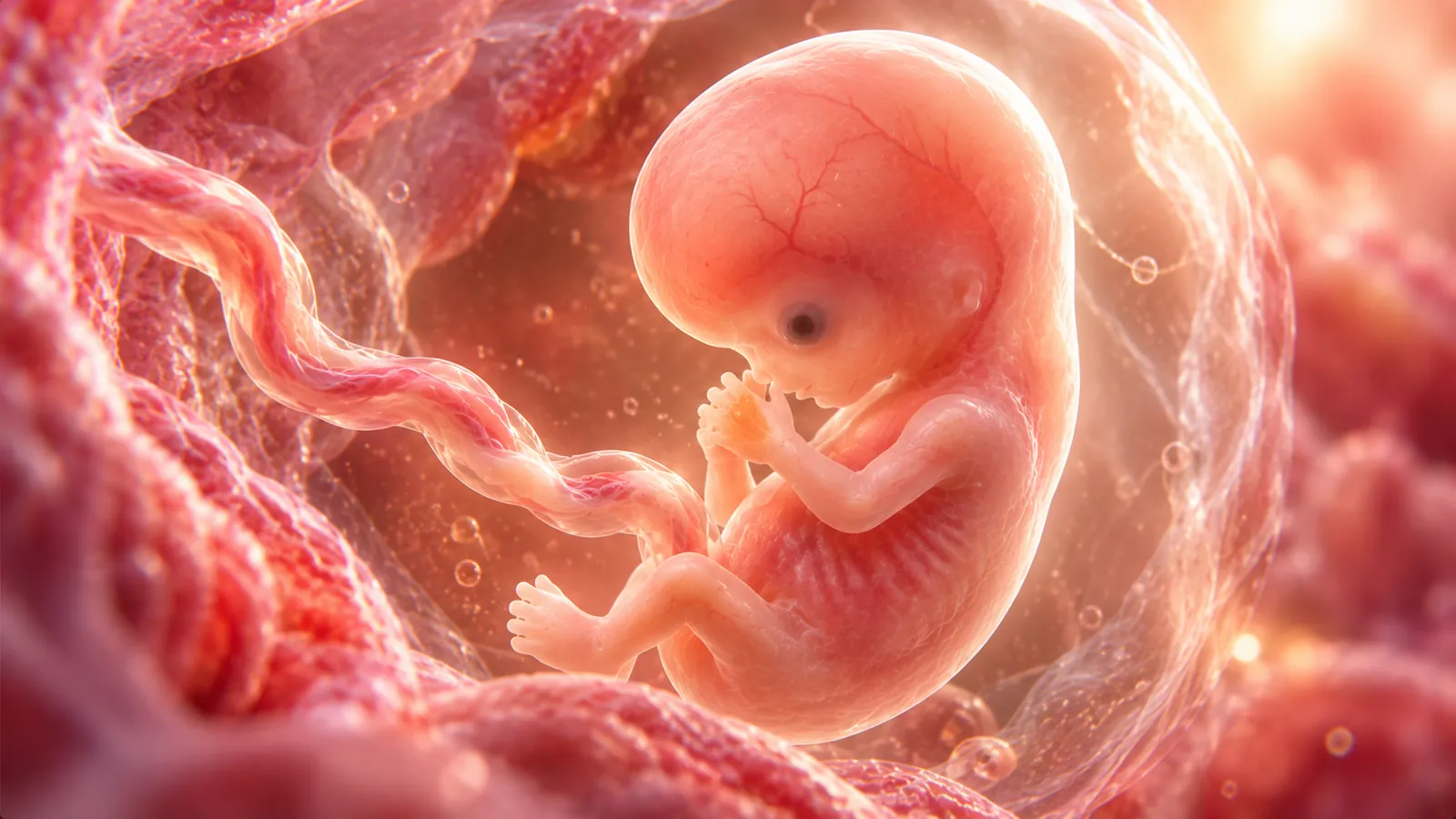
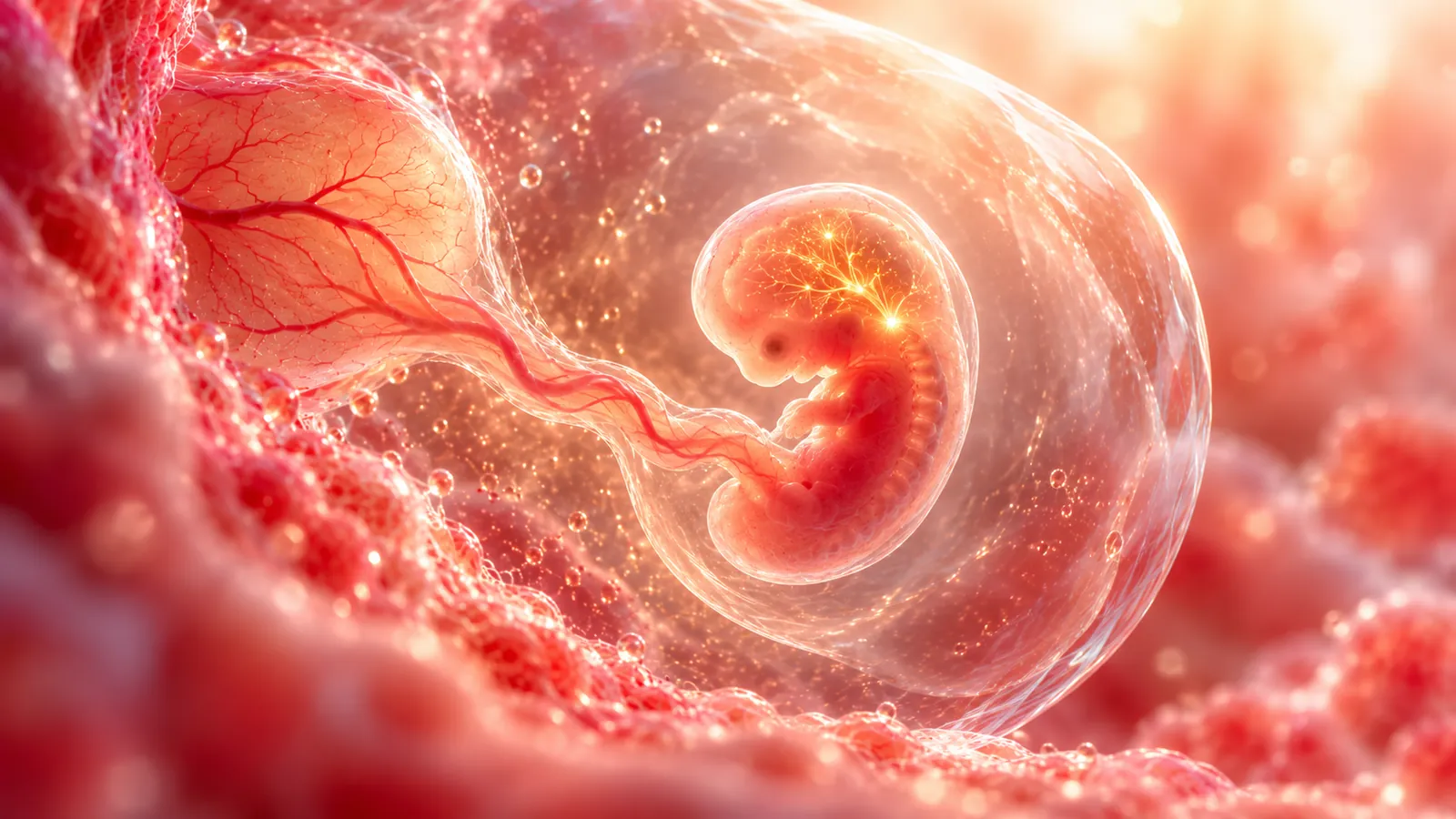
For the past several weeks, your baby has been an embryo, head down in the enormous task of building itself from almost nothing. As of this week, that phase is officially over. Your baby is now a fetus, and the word simply means the building is largely finished and the growing has begun.
The last trace of that little tail has gone. The body is straightening and filling out, looking more like a tiny person and less like a curled comma with every passing day. The head is still enormous, about half of your baby's whole length, because that quarter-of-a-million-cells-a-minute brain is still setting the pace. But the proportions are slowly, surely, turning human.
The start of teeth, hiding and waiting
Here is something that genuinely delighted me when I first learned it.
Hidden inside your baby's tiny gums this week, the buds for baby teeth are already forming. All twenty of them, taking shape in secret, years before a single one will ever break through. Years before the gummy grin, the first wobbly tooth, the coin under the pillow. They are being laid down right now, this week, while your whole baby is still barely two centimetres long.
And it is not only teeth. The very first taste buds are forming on your baby's tongue too. The mouth that will one day smile up at you, and taste your milk, and say your name, is being quietly built this week, piece by tiny piece.
How big is my baby at 9 weeks?
Around two centimetres now, head to bottom, with that big, brain-heavy head still making up about half of it. Your baby weighs only a gram or two, barely anything at all.
Still your secret. Still impossibly small. And already growing teeth.
Is it normal to feel this terrible?
If this is your hardest week yet, you are in very good company.
For a great many women, the nausea and the exhaustion hit their peak right around now, somewhere between weeks nine and ten. It can feel as though it will never lift. I promise you that for the vast majority, it does. Most women find it begins to ease as they move toward the end of the first trimester, around twelve to fourteen weeks. Knowing there is an end in sight does not take it away, but on the worst days it can be something to hold onto.
And if, on the other hand, you feel well, or your symptoms have suddenly quietened? That is also normal, and not a cause for alarm on its own. Symptoms come and go, and they are simply not a scorecard for how your baby is doing.
From Courtney. I will be honest with you. Week nine was, in every one of my pregnancies, somewhere near the bottom of the trench. Exhausted, queasy, and often unable to explain why to anyone who did not yet know. If that is you right now, I am not going to tell you to enjoy this magical time, because some of it is simply hard, and pretending otherwise helps no one. What I will tell you is that this is usually about as steep as the hill gets, and you are already most of the way up it. Your baby does not need you to feel wonderful. It just needs you, exactly as you are this week, crackers and all. Hang on. It gets lighter from here.
The one thing to do this week
If the nausea has you in its grip, here is the small trick I promised you last week, and honestly, it is the one that saved me.
Take your prenatal vitamin at night, just before bed, instead of in the morning.
Here is why it helps so much. When the nausea is at its worst, usually in the morning and on an empty stomach, a big prenatal is just about the last thing your body wants to deal with, and for a lot of women it is the very thing that tips them over into being sick. But take it last thing at night, with a little food, and you sleep straight through the queasiest stretch while it settles. You are far more likely to keep it down, and far more likely to keep taking it day after day, which is the part that truly matters.
So if mornings and your prenatal have quietly become a battle, just move it to bedtime. Such a small change, and it can make all the difference.
Coming up in week ten
Next week, your baby's hands and feet finish what they started. The last of the webbing disappears, and ten separate fingers and ten separate toes are fully formed, even beginning their own miniature nails. Your baby is bending tiny elbows and nudging about, and starting to look startlingly like a proper little person.
Week ten also brings you to the edge of something many women quietly long for. The end of the first trimester is finally coming into view. Week ten is where it starts to feel within reach. I will see you there.
The Mama Years. 2026.
You might also like
8 Weeks Pregnant: The Week Your Baby Starts to Move
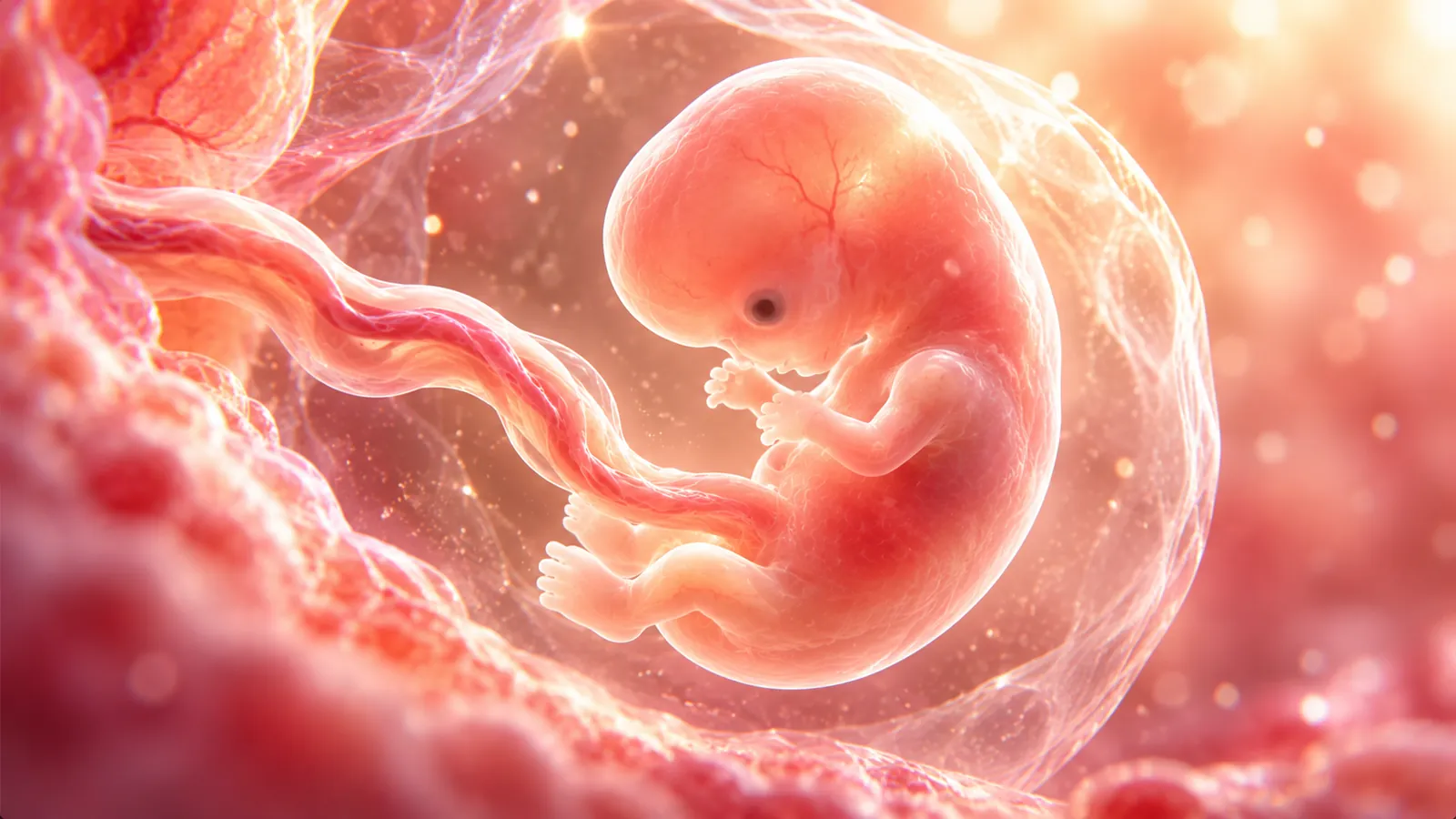
Last week, your baby's brain came alive. This week, the body it will one day command starts to move.
10 Weeks Pregnant: Ten Fingers, Ten Toes, and Fingerprints All Their Own
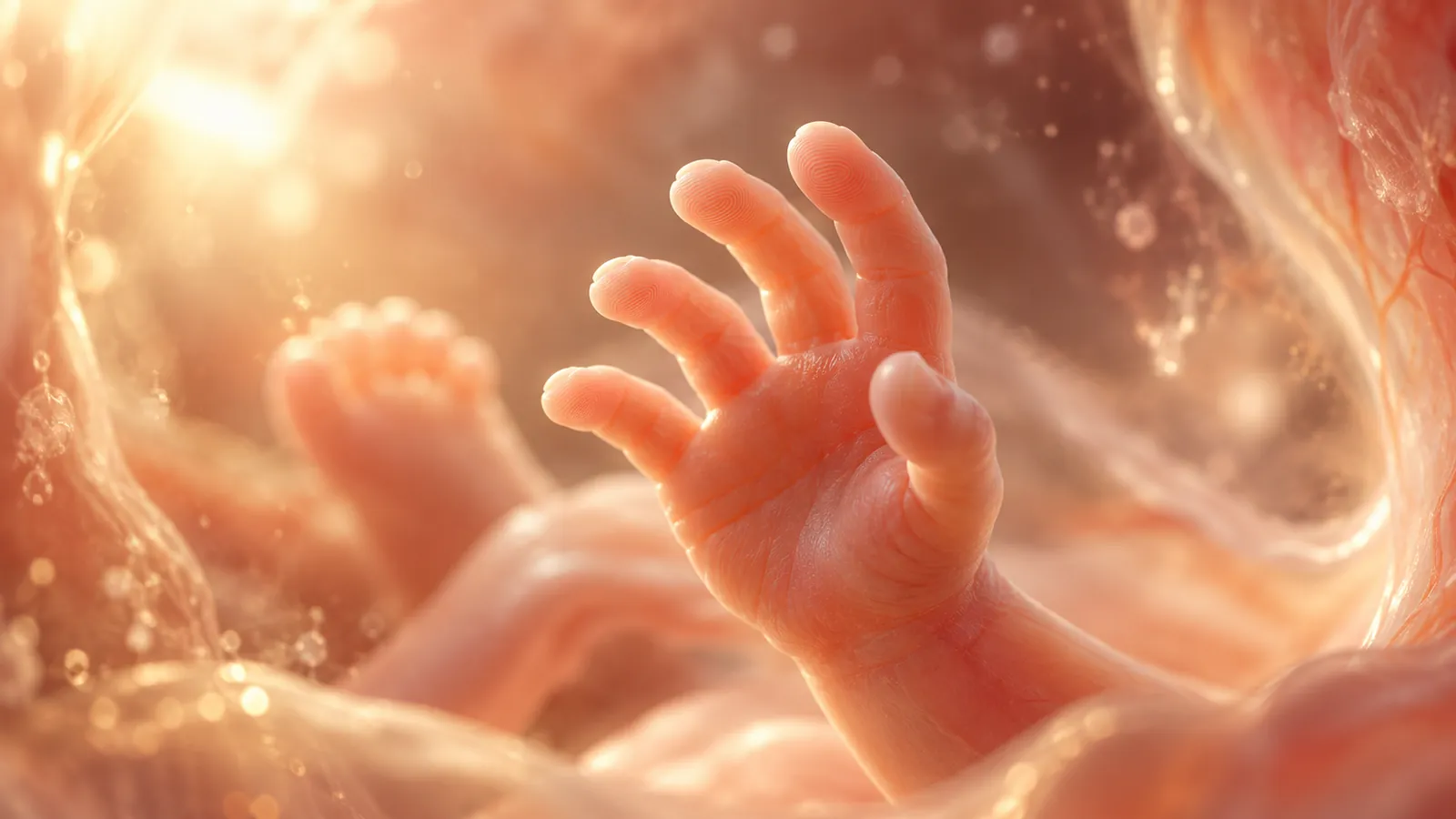
Last week, your baby got a new name and a hidden set of teeth. This week, look at the hands.
7 Weeks Pregnant: A Quarter of a Million Brain Cells a Minute
Wherever you are reading this, stop for just a second and breathe.
Want to keep following your pregnancy week by week?
Track your pregnancy, follow your baby’s development and find support for the questions that come up along the way in The Mama Years.
Open The Mama Years