


Why Is My Newborn Breastfeeding Constantly? Cluster Feeding Explained
Is your newborn wanting to breastfeed again and again? Learn what cluster feeding is, why babies do it, and how to tell whether baby is getting enough milk.
Reviewed by Courtney Garland, NICU Registered Nurse, IBCLC Lactation Consultant and Paediatric Sleep Consultant
You have just finished feeding your baby.
You finally put them down, take a sip of your now cold coffee and think:
Okay. We are done for a little while.
And then the mouth starts going.
Their head starts turning.
Those little hands come towards their face.
And they want the breast again.
You are probably sitting there thinking:
How can you possibly be hungry already?
Sometimes, this is cluster feeding.
What is cluster feeding?
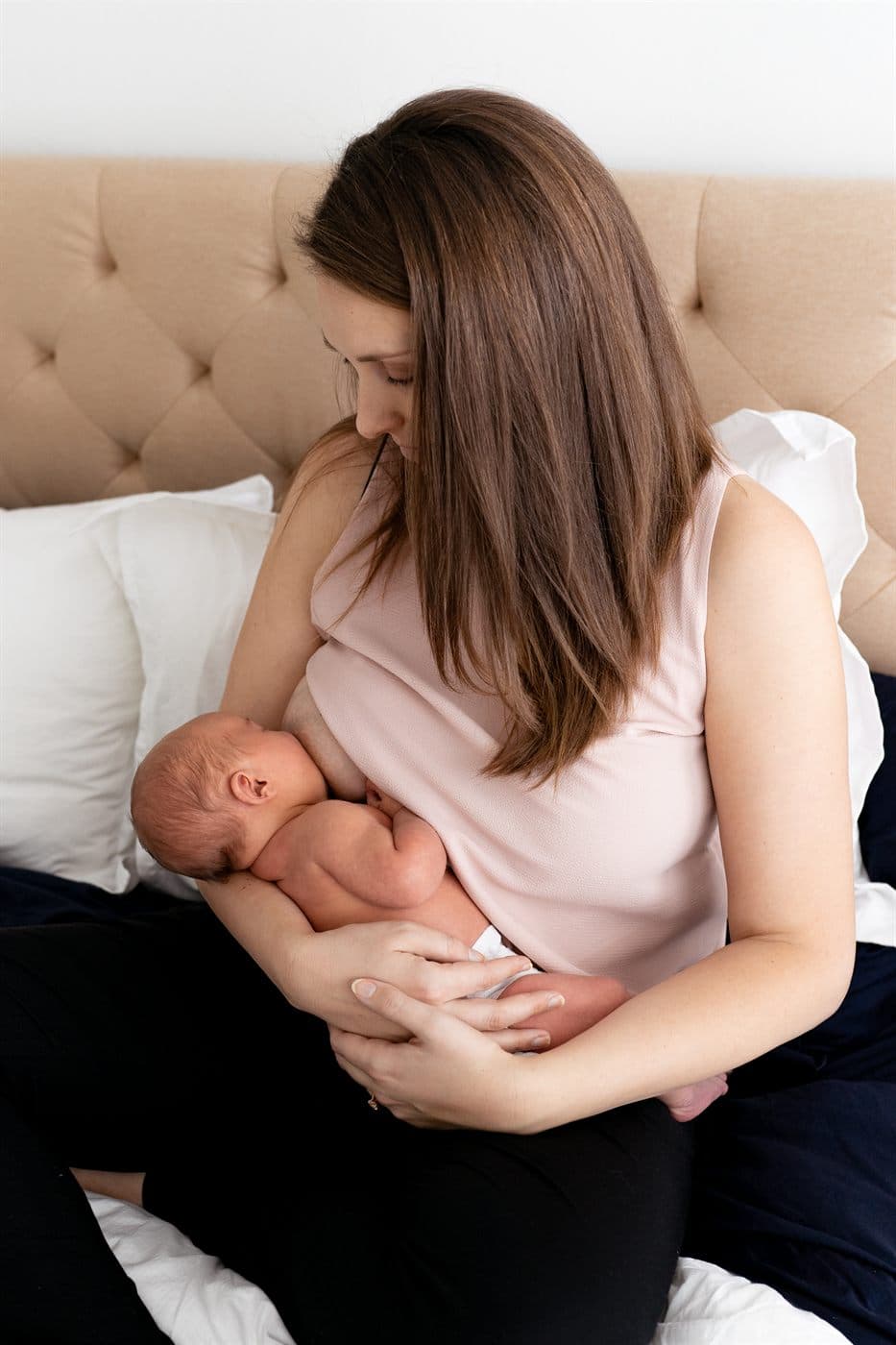
Cluster feeding is when your baby has a period where they want lots of feeds really close together.
Instead of feeding and then having a nice long break, it might feel like:
Feed.
Little rest.
Feed again.
Another tiny rest.
Back on the breast.
And repeat.
It often happens later in the day or evening, but babies do not exactly read the textbook, so it can happen at other times too.
And yes, it can feel like your baby has basically moved onto your chest.
Why does my baby do this?
In those early weeks, feeding is not always perfectly spaced.
Your baby is growing quickly, your milk supply is still finding its rhythm, and sometimes they simply want more frequent feeds for a few hours.
All that sucking also helps tell your body:
Keep making milk. Baby needs more.
And sometimes baby wants the breast for comfort and closeness too.
You are warm.
You smell familiar.
They can hear your heartbeat.
The breast is not only food to a newborn.
Does cluster feeding mean I do not have enough milk?
No, not automatically.
This is where mothers understandably start worrying.
Baby fed twenty minutes ago and now wants to feed again, so you think:
There must not have been enough milk.
But how often baby asks for the breast does not tell us by itself whether they are getting enough.
Some babies naturally have very busy feeding periods.
The better question is:
What is happening over the whole day?
How do I know baby is actually getting enough?
If baby seems to be constantly at the breast and you are sitting there wondering, “Are they actually getting enough?”, there are a few things we look at besides how often they feed.
Wet nappies, dirty nappies, how baby is feeding and weight gain as they get older can all give us clues.
Watch this short video, “Is My Baby Getting Enough Milk?”, in the Breastfeeding Library and I will walk you through exactly what to look for.
What if baby is constantly feeding and it hurts?
Then I want you to look at the latch too.
Baby can spend a lot of time at the breast without feeding as effectively as they could if the latch is shallow.
And if your nipples are becoming sore or feeding is hurting, have a closer look at how baby is attaching.
“How to Get the Right Breastfeeding Latch (Without the Pain)” in the Breastfeeding Library will show you what I want you to look for.
Sometimes one small adjustment can make a huge difference.
Related articles
• How Do I Know My Breastfed Baby Is Getting Enough Milk?
• My Milk Hasn’t Come In Yet. What Is My Baby Actually Drinking?
You might also like

My Milk Hasn’t Come In Yet. What Is My Baby Actually Drinking?
If your milk has not come in yet, what is your newborn actually drinking? Learn what colostrum is, why baby may feed so often, and when your milk usually starts increasing.

The First Breastfeed: What Actually Happens After Birth?
Wondering what the first breastfeed will actually be like? Learn when baby may be ready to feed, what a good latch should feel like, and what to do with a sleepy newborn.
How Do I Know My Breastfed Baby Is Getting Enough Milk?
Wondering if your breastfed baby is getting enough milk? Learn the signs to look for, including nappies, feeding, settling and weight gain.
Want to see your baby’s patterns come together?
Track feeds, sleep, nappies and growth in one place, and find support for the questions that come up along the way in The Mama Years.
Open The Mama Years