25 Weeks Pregnant: The Week Your Baby's Brain Begins to Fold
Last week, your baby started to answer you back. This week, deep inside that busy little head, the brain takes on the shape it will keep for life. It begins to fold.
Reviewed by Courtney Garland, NICU Registered Nurse, IBCLC Lactation Consultant and Paediatric Sleep Consultant
Welcome to week twenty-five. Your baby's brain is wrinkling into the deep grooves of a true human mind, your baby is plumping up and looking more like a newborn, and the nose joins in with the practice of breathing. Let me show you.
Your baby's brain is starting to fold
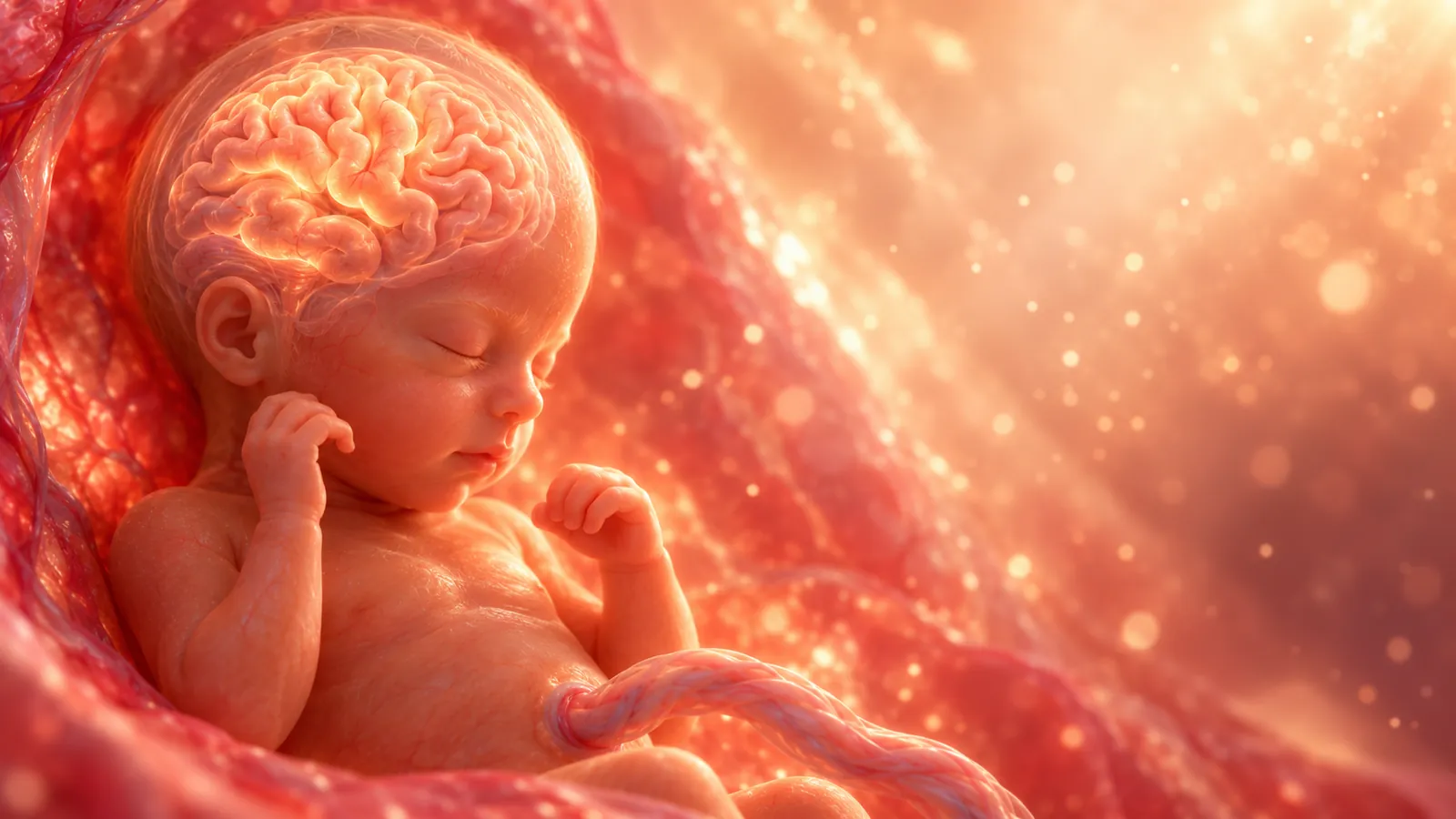
Until quite recently, your baby's brain was smooth, like a little polished bean. This week, that changes in the most remarkable way. It begins to fold.
Here is why, and it is genuinely clever. Your baby's brain is growing an enormous outer layer, the cortex, the wrinkly part where all the thinking, remembering, and feeling will one day happen. But that layer is far too big to fit smoothly inside a head small enough to be born. So it does the only thing it can. It crumples. Exactly like crushing a large sheet of paper into a ball to fit it in your fist, the cortex buckles and folds in on itself, creating the deep grooves and ridges of a real human brain.
And those folds are not just clever packing. They are space. Every new wrinkle forming this week, and over the months still to come, makes more room for brain, and so more room for everything your baby will ever think and feel and remember. The mind that built itself at a quarter of a million cells a minute back in week seven is now folding itself into the shape it will carry for life.
Somewhere in those new folds, one day, will live the memory of your face. Your voice. The smell of home. Your whole baby is being made in there, fold by fold.
Plumping up
Your baby is also getting rounder and softer this week.
That layer of fat your baby has been laying down is starting to fill them out, smoothing the deep wrinkles in the skin and making them look less like a tiny old soul and more like a chubby little newborn. The skin, once see-through, is turning pinker and more solid as blood fills the vessels just beneath it. Slowly, surely, your baby is beginning to look ready for the world.
Learning to breathe through the nose
Another small rehearsal begins this week. Your baby's nostrils, plugged until now, open up, and your baby starts practising breathing movements through the nose, drawing the surrounding fluid gently in and out. There is still no air, of course. But the nose, like the lungs and the chest, is quietly getting ready for the day that there will be.
How big is my baby at 25 weeks?
Around thirty-four to thirty-five centimetres now, head to heel, and roughly seven hundred grams. Your baby is growing fast, filling out, and slowly running low on spare room, so you may be feeling those movements more firmly than ever, the occasional jab landing in a rib or a bladder.
Strong, busy, and building that extraordinary brain by the second.
What is happening in my body?
You are nearing the end of the second trimester now, and your bump is sizeable and proud.
You may also be noticing some of the less glamorous parts of this stage, a bit of heartburn, an achy back, trouble finding a comfy way to sleep, the odd practice tightening across your belly. All very common as your body makes room and your baby grows. Be kind to yourself, prop yourself up with pillows, and mention anything that worries you to your midwife. You are doing the hard, invisible work of growing a whole person, and it is allowed to be tiring.
From Courtney. I find the brain the most astonishing thing of all, and this week is exactly why. Picture it. To fit a sheet of thinking as large as your baby will one day need into a head small enough to be born, that sheet has to fold, over and over, into deep ridges and valleys, the way you might crumple a big piece of paper to fit it in your hand. And every one of those folds, forming right now, is making room. Room for the first word. Room for remembering your face. Room for a favourite song, a best friend, a sense of humour, a whole entire person. The shape of your baby's mind is being pressed into being this week. If that does not stop you in your tracks, I do not know what will. Rest up, mama. Your baby is building something extraordinary in there.
The one thing to do this week
Your baby's brain is doing some of the most extraordinary work of the whole pregnancy this week, and one of the loveliest things you can offer it is a mama who is looked after. So this week, do one small, kind thing just for you. A proper rest, a slow cup of tea, a walk somewhere green, a few minutes of music you love.
There is no pressure here, and nothing you have to get right. A calm, cared-for you is simply a good place for your baby to keep growing. So put your feet up. You have earned it.
Coming up in week twenty-six
At week twenty-eight, your baby opens their eyes for the very first time. After months sealed shut, those little eyelids part, and your baby begins to blink and peer into the dim, rosy world of your womb. Your baby is also starting to make the pigment that will one day set the colour of those eyes and that soft skin.
Week twenty-six is where your baby starts filling out. I will see you there.
The Mama Years. 2026.
You might also like

24 Weeks Pregnant: The Week Your Baby May Start Dreaming
Last week, your baby's lungs began getting ready to breathe. This week, something even more wonderful happens between the two of you. Your baby starts to answer.
26 Weeks Pregnant: Your Baby Is Starting to Look Like a Newborn
Your baby has spent months building all the tiny pieces of themselves.
27 Weeks Pregnant: The Week Your Baby Starts Learning You by Heart
Last week, your baby started filling out. This week, you cross into the final stretch, and your baby begins to do something profound. Not just to hear you, but to know you,...
Want to keep following your pregnancy week by week?
Track your pregnancy, follow your baby’s development and find support for the questions that come up along the way in The Mama Years.
Open The Mama Years