

3 Weeks Pregnant: The Week You Might Quietly Become a Mother of Two
Last week ended on a cliffhanger. The race was won, and one tiny sperm was pressed against the egg, about to break through.
Reviewed by Courtney Garland, NICU Registered Nurse, IBCLC Lactation Consultant and Paediatric Sleep Consultant
This is the moment it does. And what happens next is, to me, the most beautiful thing in all of biology.
Your baby's life begins with a flash of light
The instant that one sperm breaks through, the egg does two astonishing things at once.
First, it slams the door. In a single heartbeat, it changes its entire outer surface so that not one of the millions of other sperm still battering against it can ever get in. Out of all of them, one made it. The door closes behind it, for good.
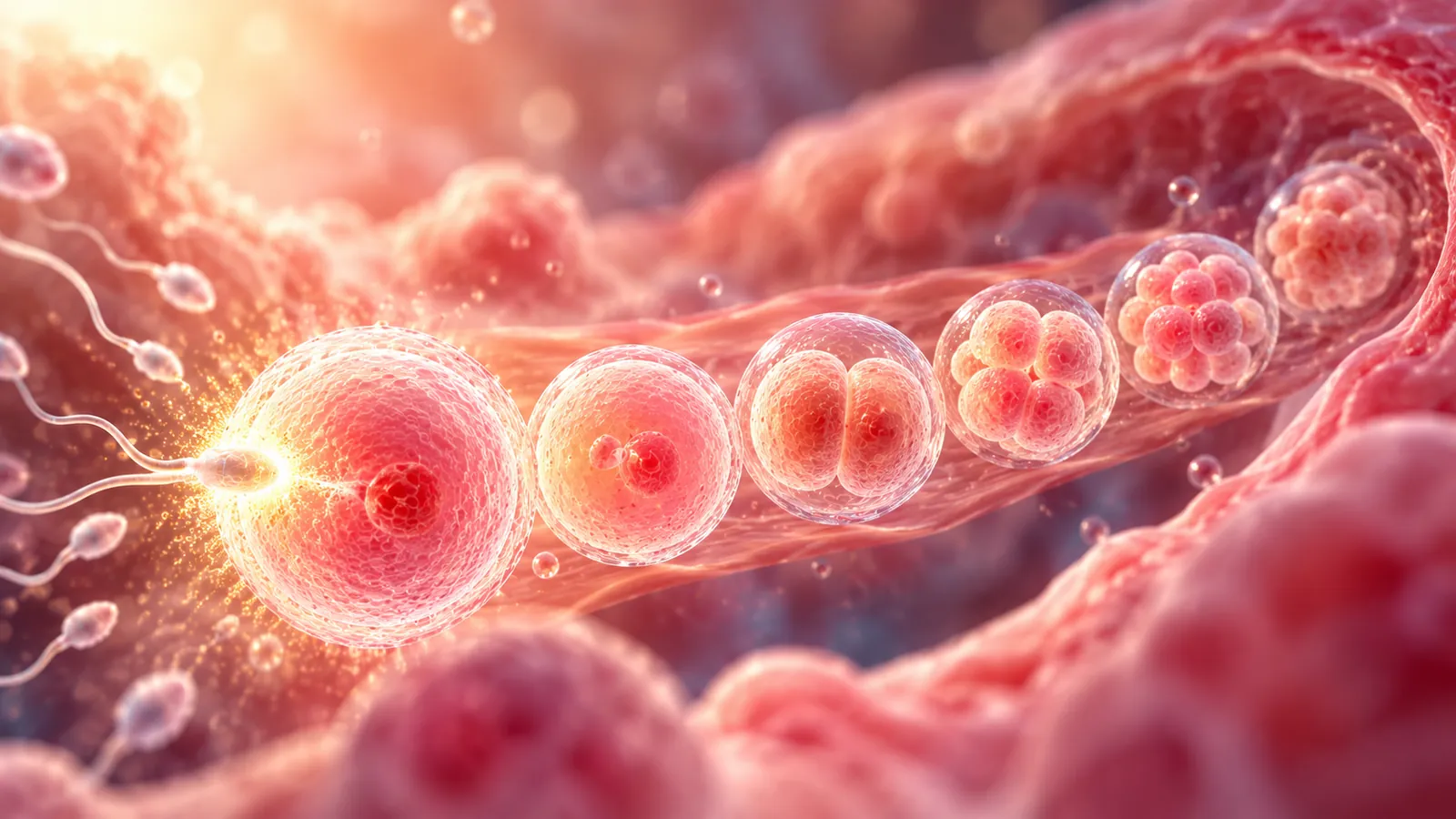
And second, it lights up. Not as a turn of phrase. The egg flings out billions of zinc atoms all at once, in shimmering, radiating waves, and as they go, they give off light. A real flash, bright enough that scientists can measure it, at the precise instant of conception.
They call it the zinc spark. Researchers at Northwestern University managed to capture it in a human egg for the very first time in 2016, and one of them, Professor Teresa Woodruff, simply called it "breathtaking." The brighter the flash, it turns out, the healthier the egg tends to be.
Stay with that for a moment. The very first instant of your baby's existence, the opening frame of the whole story, was not a whimper in the dark. It was a flash of light. I will never quite get over that, and I hope you never quite do either.
And in that same second, your baby became your baby
The egg and the sperm are now one single cell, called a zygote. And astonishingly, it already holds the entire plan for the person your baby will become. A brand new set of instructions, half from you and half from your partner, written in a combination that has never existed before in all of human history and will never exist again. Not in anyone. Ever.
The colour of their eyes. Whether they will be tall. The shape of the smile you will one day know better than your own. All of it, settled in this one cell, this week. Even whether your baby is a boy or a girl was decided in that instant, by which single sperm got there first. It is already true, right now, long before any scan could whisper a word of it to you.
Then it begins to divide
That single cell does not sit still for a second.
About a day after it forms, it makes its first move. It splits in two. Then those two become four. Four become eight. Eight become sixteen. And here is the part that surprises everyone. The little cluster does not get any bigger as this happens. The cells simply get smaller and more numerous, so the whole thing stays about the size of a full stop, even as the number of cells inside it climbs and climbs.
And all of this is happening on the move. The tiny ball of cells is being carried slowly down your fallopian tube toward your womb, a trip that takes about three or four days.
A ball of cells, and its very first decision
By around day five, that cluster has become a hollow ball of roughly one hundred cells. It has a name, the blastocyst, but the lovely part is what it has already done.
It has made its first ever decision.
The cells have quietly sorted themselves into two groups. One group, tucked on the inside, will become your baby. The other group, wrapped around the outside, will become the placenta, the remarkable organ that will feed and protect your baby for the whole pregnancy.
The very first thing these cells ever do is decide who builds the baby, and who builds everything that keeps the baby alive. I find that almost unbearably clever.
Then it does something you would never expect. It hatches.
This whole time, your tiny ball of cells has been tucked inside a delicate shell, the same shell that once surrounded the egg.
But it cannot settle into your womb while it is still wrapped up. So it does something that sounds like a fairytale and is completely real. It hatches. It breaks free of its shell, slipping out like the world's tiniest chick, so that it can finally burrow in and make itself at home.
Scientists actually call this step "hatching." Your baby's first home had a shell, and your baby hatched out of it.
The week you might quietly become two
Now here is the moment I have been waiting all week to tell you about.
In these first few days, the cells in that little ball are so fresh, so completely unspecialised, that each single one still holds the full set of instructions to build an entire human being. Not a part of a person. A whole one.
So if that little ball happens to split cleanly in two, something extraordinary happens. You do not get half a baby twice over. You get two complete babies, each one whole, each one able to grow into a full and separate person. Identical twins. One egg, one sperm, one cell, that quietly, silently, became two.
It happens by pure chance, in around four of every thousand pregnancies. And here is the myth I love to put to rest. Identical twins do not run in families. Nothing you did, nothing you ate, nothing you inherited makes it any more or less likely. It is simply one of the most astonishing coin tosses in all of nature.
So this week, without a single flutter or feeling or clue, you might already be carrying two.
Can I get a positive test yet? And does a strong line mean twins?
Probably not yet, and here is why.
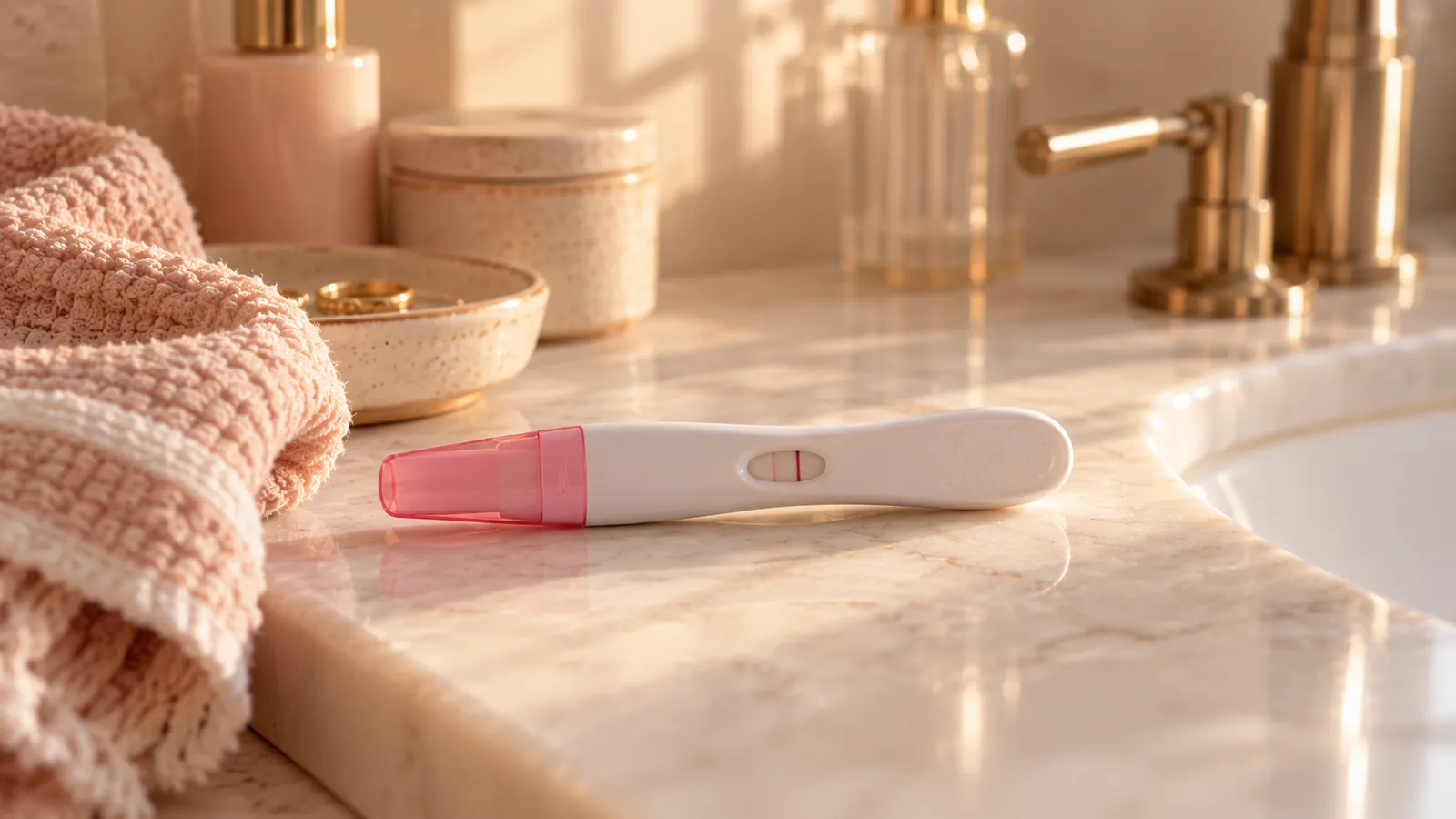
A pregnancy test looks for a hormone your body only starts making once the ball of cells burrows into your womb, and that is only just beginning at the very end of this week. Test now, and it will likely say no, even though everything is going beautifully.
And that popular question, does an early positive mean twins? Not reliably. A strong line is usually just a sign that your hormone levels are rising, not a secret twin announcement. The only way to truly know is an ultrasound a little further down the road.
Is it normal to feel completely normal?
Completely. This is all happening at a microscopic scale, and there is nothing to feel.
A few women notice a tiny bit of light spotting right at the end of this week, as the ball of cells starts to burrow in. It even has a name, implantation spotting. But most women feel absolutely nothing at all, and that is just as normal. The famous symptoms are still a week or two away, waiting on the hormones to arrive.
From Courtney. I have cared for so many tiny babies in my arms, and I still cannot truly hold this in my head. While you are reading this, maybe half-watching the kettle or lying awake wondering, your body could be building an entire person from a speck smaller than a grain of sand. Maybe even two. No fanfare. No proof yet. Just your quiet, clever body doing the most complicated thing it will ever do, and asking nothing of you in return. If you take one feeling from this week, let it be awe at yourself.
The one thing to do this week
If you are taking folate, keep it going. And if you are not yet, today is a good day to start.
This is the week it really begins to earn its place, because in just a few days those cells start laying down the very first foundations of your baby's brain and spine, and folate is what helps protect that work. Wherever you are starting from, getting it on board now still helps.
And if you can bear it, hold off on testing for a few more days. A test now is more likely to mislead you than reassure you, and you deserve a real answer, not a too-early one.
Coming up in week four
Next week is the one your body has been keeping secret. The little ball finishes burrowing into your womb, and the instant it does, it sends out its very first message. A hormone that travels through your body saying, I am here, please do not let the period come. It is the very same hormone a pregnancy test is looking for.
So next week, that faint second line finally becomes possible, and what you will be reading, really, is your baby's first word to you.
Week four is when your body lets you in on the secret. I will see you there.
The Mama Years. 2026.
You might also like
2 Weeks Pregnant: The Greatest Race You Will Never See
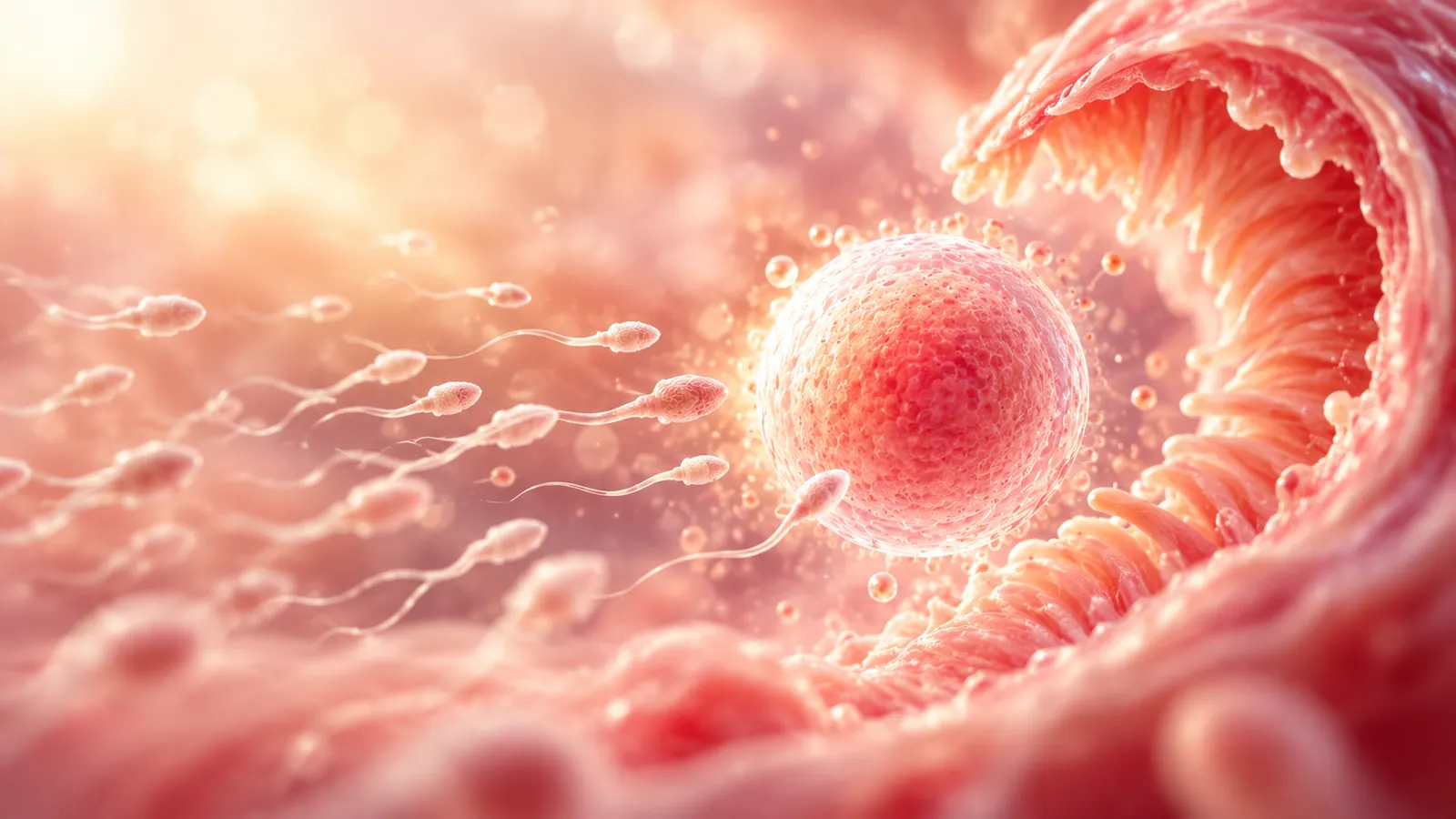
Last week, the egg waited. This week, it is finally set free, and the most extraordinary race in all of nature begins.

1 Week Pregnant: The Egg's Story That Began Before You Did
Before the positive test. Before the missed period. Before you even suspected anything had changed, there was already a story unfolding inside your body.
4 Weeks Pregnant: The Week Your Baby Announces Itself
For three weeks, your body has been keeping the most extraordinary secret. This is the week it finally lets you in on it.
Want to keep following your pregnancy week by week?
Track your pregnancy, follow your baby’s development and find support for the questions that come up along the way in The Mama Years.
Open The Mama Years