


Instrumental Birth: Forceps and Vacuum
Why might forceps or vacuum be needed? Learn what happens during an assisted vaginal birth, what to expect afterwards and how recovery can feel.
Reviewed by Courtney Garland, NICU Registered Nurse, IBCLC Lactation Consultant and Paediatric Sleep Consultant
My first birth ended with an emergency forceps delivery, and I still remember how quickly everything changed.
My baby's heart rate kept dropping, more people started coming into the room, and suddenly everything felt very serious.
As a NICU nurse, I understood what those changes in his heart rate could mean. But being the mother lying in that bed was a completely different experience.
If you've been told you might need forceps or vacuum assistance, here's what I want you to understand.
What is an instrumental birth?
An instrumental birth, also called an assisted vaginal birth, is when a doctor uses forceps or a vacuum device to help your baby be born.
You still give birth vaginally, but your baby needs some additional help.
This might be recommended if your baby's heart rate is concerning, pushing isn't progressing, you're exhausted or there's a medical reason to avoid prolonged pushing.
What do forceps actually look like?
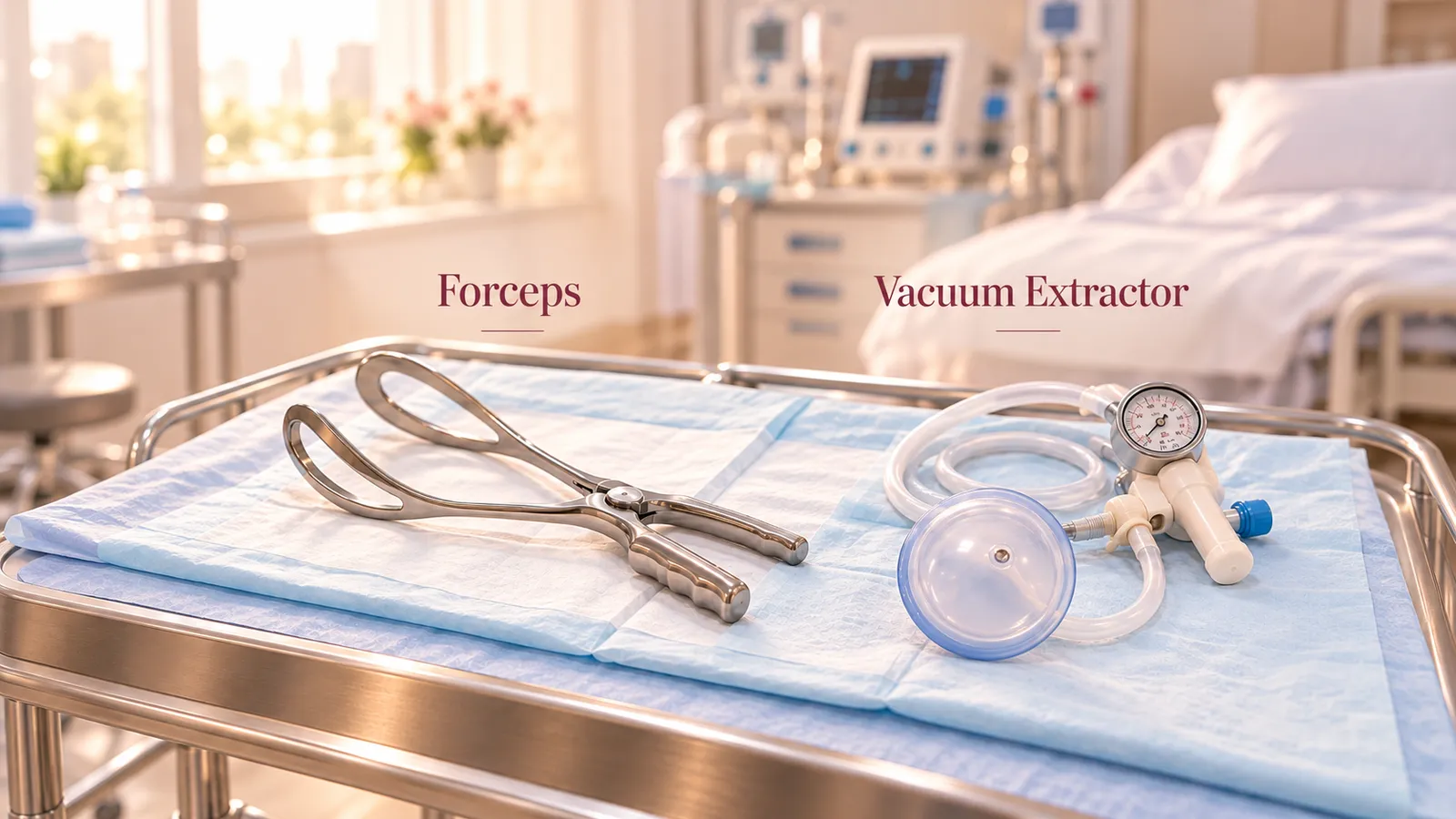
Forceps are smooth, curved metal instruments that look a little like two large spoons.
They're carefully positioned around the sides of your baby's head.
During contractions, the doctor uses controlled traction while you push to help guide your baby out.
How does a vacuum birth work?
A vacuum device, also called a ventouse, uses a small cup placed on your baby's head.
Suction holds the cup in place while the doctor gently guides your baby down during contractions.
You'll usually still be asked to push.
Both methods are designed to assist your baby's birth, but neither is automatically the better option.
Why would they choose forceps instead of vacuum?
This is something I wondered about after my own birth.
My baby was big, his heart rate was dropping, and everything was happening quickly.
He was eventually born weighing 4.43 kilograms, with a head circumference of 38.5 centimetres.
The safest instrument depends on several things, including your baby's position, how far they've moved down, their wellbeing and the doctor's assessment and experience.
If there's time, ask why they're recommending one method over the other.
Will an assisted birth hurt?
You should be offered appropriate pain relief or anaesthesia.
This might involve an existing epidural, spinal anaesthesia or local anaesthetic, depending on the situation.
I already had an epidural, so I didn't feel much of the actual forceps procedure.
What I remember most was the urgency and how quickly the room changed.
What will my baby look like afterwards?
Babies born with forceps may have temporary marks or bruising on their face.
Vacuum-assisted babies can have swelling or a mark on their scalp where the cup was placed.
My son had bruising on the side of his face and a bloodshot eye.
It was confronting to see, but thankfully those marks settled.
Most babies recover well, although serious injuries can occasionally happen. Your baby will be assessed after birth.
What about my recovery?
You may feel particularly swollen, bruised or tender after an assisted birth. Tears, stitches and pelvic floor injuries are also more likely than with an unassisted vaginal birth.
After my forceps delivery, I could barely sit comfortably. Cold packs and a peri bottle were absolute lifesavers.
We cover recovery in more detail in Vaginal Birth Recovery: What to Expect.
If an assisted birth is recommended, ask what's happening and why. And if everything moves too quickly to take in, you can always request a birth debrief afterwards.
I wish I'd understood more about forceps before my first birth. Sometimes just knowing what an instrument does and why it might be needed can make an unfamiliar situation feel a little less frightening.
Read next
• Pushing in Labour: What to Expect
You might also like

What Transition in Labour Actually Feels Like
What does transition in labour feel like? Learn about intense contractions, pressure, emotions and what can help you through it.

Pushing in Labour: What to Expect
What does pushing in labour feel like? Learn about pressure, pushing positions, crowning and why feeling like you need to poo is normal.

Emergency Caesarean Birth: When the Plan Suddenly Changes
Understand what happens during an emergency caesarean birth, why it may be recommended and what to expect in theatre and afterwards.
Getting ready for birth?
Follow your pregnancy to the very end, get ready for labour and birth, and find support for the questions that come up along the way in The Mama Years.
Open The Mama Years