


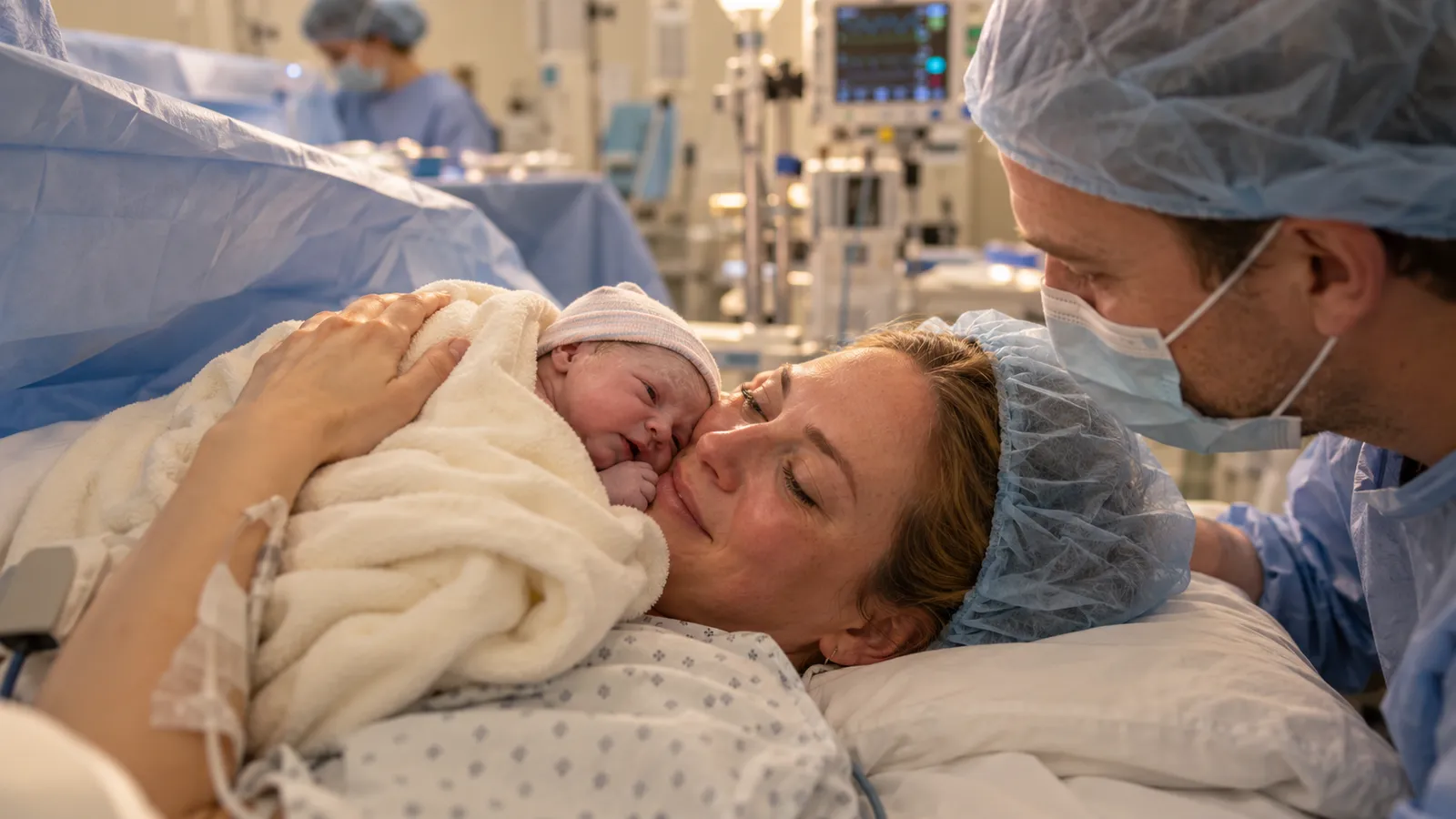
Planned Caesarean Birth: What to Expect
Preparing for a planned caesarean? Learn about anaesthesia, the operating theatre, meeting your baby, skin to skin and early recovery.
Reviewed by Courtney Garland, NICU Registered Nurse, IBCLC Lactation Consultant and Paediatric Sleep Consultant
If you've been told you'll be having a planned caesarean, you might be wondering what actually happens on the day.
Will you be awake? Will your partner be there? And how soon will you get to hold your baby?
Having a date in the calendar can feel reassuring, but knowing you're about to have surgery can also bring up plenty of nerves.
I haven't personally had a caesarean, so I won't pretend to know exactly what it feels like. But as a nurse, I want you to understand what usually happens and what you can ask for.
Why might I have a planned caesarean?
A planned caesarean is an operation arranged before labour, sometimes because of your baby's position, placental concerns, previous uterine surgery or another medical reason.
Some mothers also choose a caesarean after discussing the benefits and risks with their maternity team.
If there's no medical reason to deliver earlier, planned caesareans are generally scheduled from 39 weeks, when your baby is more developed, particularly their lungs, making breathing difficulties after birth less likely.
What happens when I arrive at hospital?
You'll usually meet members of your theatre and anaesthetic teams, have some routine checks and be prepared for surgery.
You'll have an IV cannula, and a urinary catheter is usually inserted around the time of your anaesthetic.
You'll also be asked to follow instructions about when to stop eating and drinking before surgery.
There can be a bit of waiting, particularly if an unexpected emergency changes the theatre schedule.
Will I be awake during my caesarean?
Most planned caesareans are performed with a spinal anaesthetic, which numbs the lower part of your body while you're awake.
You'll usually sit or lie curled forward while the anaesthetist places it in your lower back.
Once it's working, your team checks that you're sufficiently numb before surgery begins.
A screen is placed across your abdomen so you don't have to watch the operation.
And your partner or chosen support person can usually sit beside your head.
Will I feel my baby being born?
You shouldn't feel sharp surgical pain, but you may notice pressure, pulling or tugging.
Some mothers describe it as an unusual amount of movement in their tummy.
If anything feels painful, tell your anaesthetist straight away.
Your baby is usually delivered during the earlier part of the operation. The surgical team then delivers the placenta and closes the incisions, which takes additional time.
Can I have skin to skin after a caesarean?
Often, yes!
If you and your baby are both well, many hospitals support skin to skin in theatre or shortly afterwards.
You might need some help positioning your baby safely while you're lying on the operating table.
You can also ask about delayed cord clamping, having your partner involved and whether your hospital offers the option of lowering the screen when your baby is born.
Some hospitals also offer maternally assisted caesareans, where, in carefully selected circumstances, the mother can help lift her baby towards her chest once the surgical team has safely delivered the baby's head and shoulders.
It's not available everywhere, so if this interests you, speak with your obstetric team well before your birth.
Will I be able to breastfeed?
Absolutely!
You might just need a little extra help getting comfortable, especially while you're numb or feeling sore.
One of my favourite tips as an IBCLC is to try the football hold, where your baby is tucked beside you rather than lying across your tummy.
Use plenty of pillows to support your arms and baby, keeping pressure away from your incision.
And if you're not able to feed straight away, don't panic. Ask for help with skin to skin, expressing colostrum if needed, and getting that first breastfeed started when you and your baby are ready.
What happens after surgery?
You'll be monitored as the anaesthetic wears off, including checks of your blood pressure, bleeding and pain.
Your team will help you get up safely when you're ready and explain how to look after your incision.
We'll cover that properly in Caesarean Birth Recovery: What to Expect.
A planned caesarean can feel very different from the birth you once imagined. Knowing what will happen, who will be beside you and which choices are available can help make the day feel a little more familiar.
Read next
• Emergency Caesarean Birth: When the Plan Suddenly Changes
• Caesarean Birth Recovery: What to Expect
• The First Breastfeed: What to Expect
You might also like

What Transition in Labour Actually Feels Like
What does transition in labour feel like? Learn about intense contractions, pressure, emotions and what can help you through it.

Pushing in Labour: What to Expect
What does pushing in labour feel like? Learn about pressure, pushing positions, crowning and why feeling like you need to poo is normal.

Instrumental Birth: Forceps and Vacuum
Why might forceps or vacuum be needed? Learn what happens during an assisted vaginal birth, what to expect afterwards and how recovery can feel.
Getting ready for birth?
Follow your pregnancy to the very end, get ready for labour and birth, and find support for the questions that come up along the way in The Mama Years.
Open The Mama Years